From the Samurai Sword to the Kitchen — What Japanese Knives Inherited from Katanas
Have you ever wondered why Japanese kitchen knives cut so flawlessly? Why they are rare, expensive, and admired worldwide? The answer lies in their history.
In 1876, the Haitorei Edict was enacted in Japan, officially prohibiting samurai from wearing swords in public. This law ended the era of legendary katanas. Japan’s finest swordsmiths, having lost their primary clientele, were forced to adapt. They redirected centuries of metallurgical knowledge and craftsmanship into a new field — the production of kitchen knives.
Today, the Japanese knife in your hand carries the same “soul” and technology once designed for the battlefield, now refined for the perfect cut in your kitchen.
The Heart of Cutting: Steel Construction
 The secret of a traditional sword — and a high-end knife — lies in combining seemingly incompatible qualities: extreme hardness and flexibility.
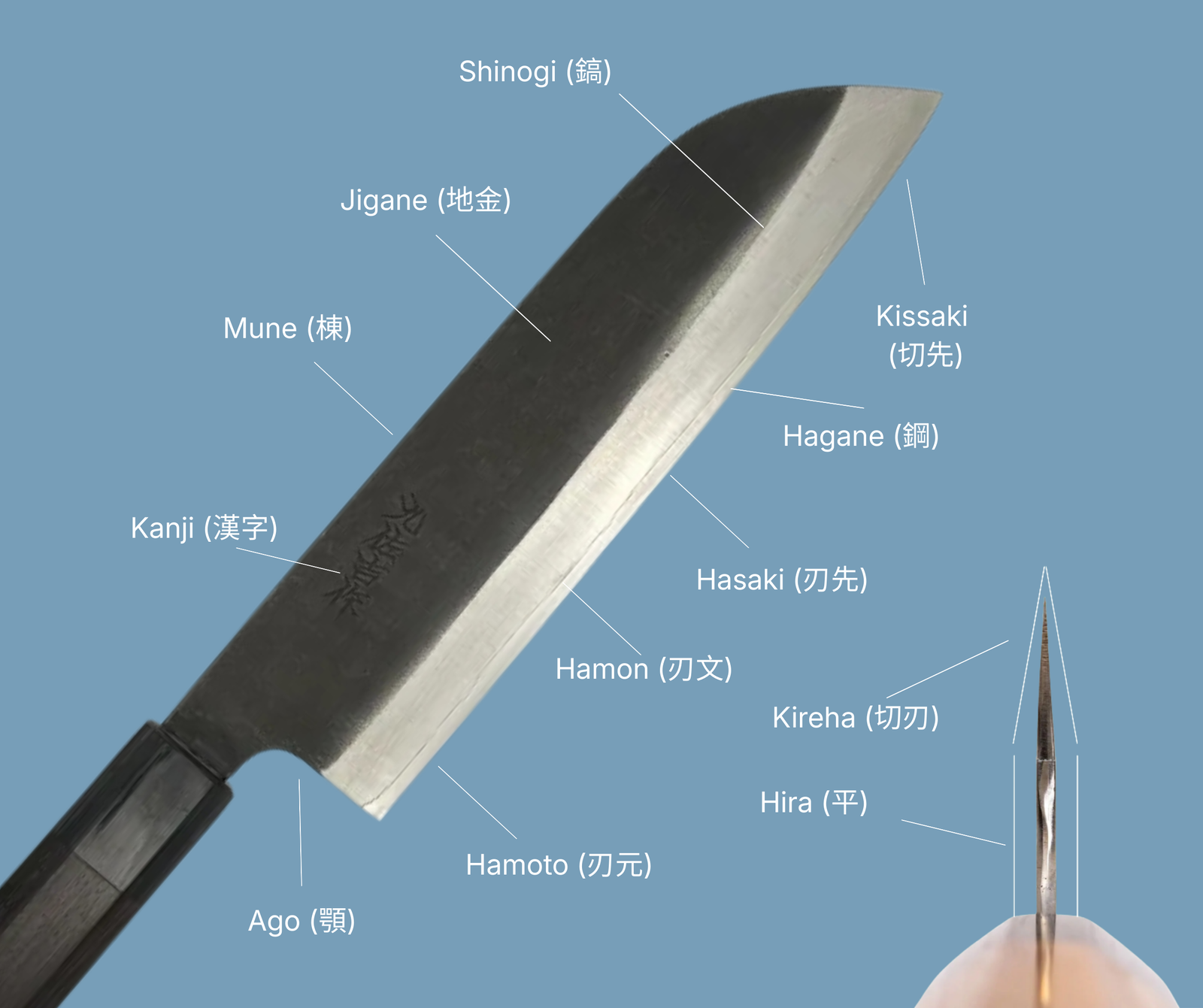
Hagane (鋼) — Hard Steel
This is the knife’s core and its soul. Like a katana edge, Hagane is made from high-carbon steel (e.g., Aogami or Shirogami) with hardness reaching 60–67 HRC.
Jigane (地金) — Soft Cladding
Extremely hard steel is brittle. To prevent breakage, smiths “dress” the Hagane core with softer metal layers. This protects the core from fractures — the same technology that once prevented katanas from breaking in combat.
Hamon (刃文) — Temper Line
This is the visible wavy line on the blade marking the boundary between hard and soft steel. It is not only aesthetic but also proof of complex heat-treatment craftsmanship.
Blade Geometry and the Physics of Cutting
Western knives often rely on force and weight. Japanese knives rely on surgical geometry.
Hasaki (刃先) — Cutting Edge
The sharpest part of the knife. Japanese knives are sharpened at a very acute angle (typically 10–15 degrees per side), allowing the blade to glide through food without tearing cell structure.
Kireha (切刃) — Primary Bevel
The plane rising from the edge. Its angle determines how easily the knife passes through dense ingredients.
Shinogi (鎬) — Ridge Line
The line where the bevel meets the blade face. It helps push food away, reducing sticking.
Hamoto (刃元) — Heel
The part of the blade closest to the handle. It is the most stable and strongest section, used for tasks requiring greater pressure or precise control when starting a cut.
Ago (顎) — “Chin”
The junction where the blade heel meets the neck of the knife. In professional kitchens, the Ago is crucial — chefs often hook their middle finger behind it when using a pinch grip, ensuring maximum control and balance.
Kissaki (切先) — Tip
The pointed end used for delicate, precise work.
Wa and Yo Handles
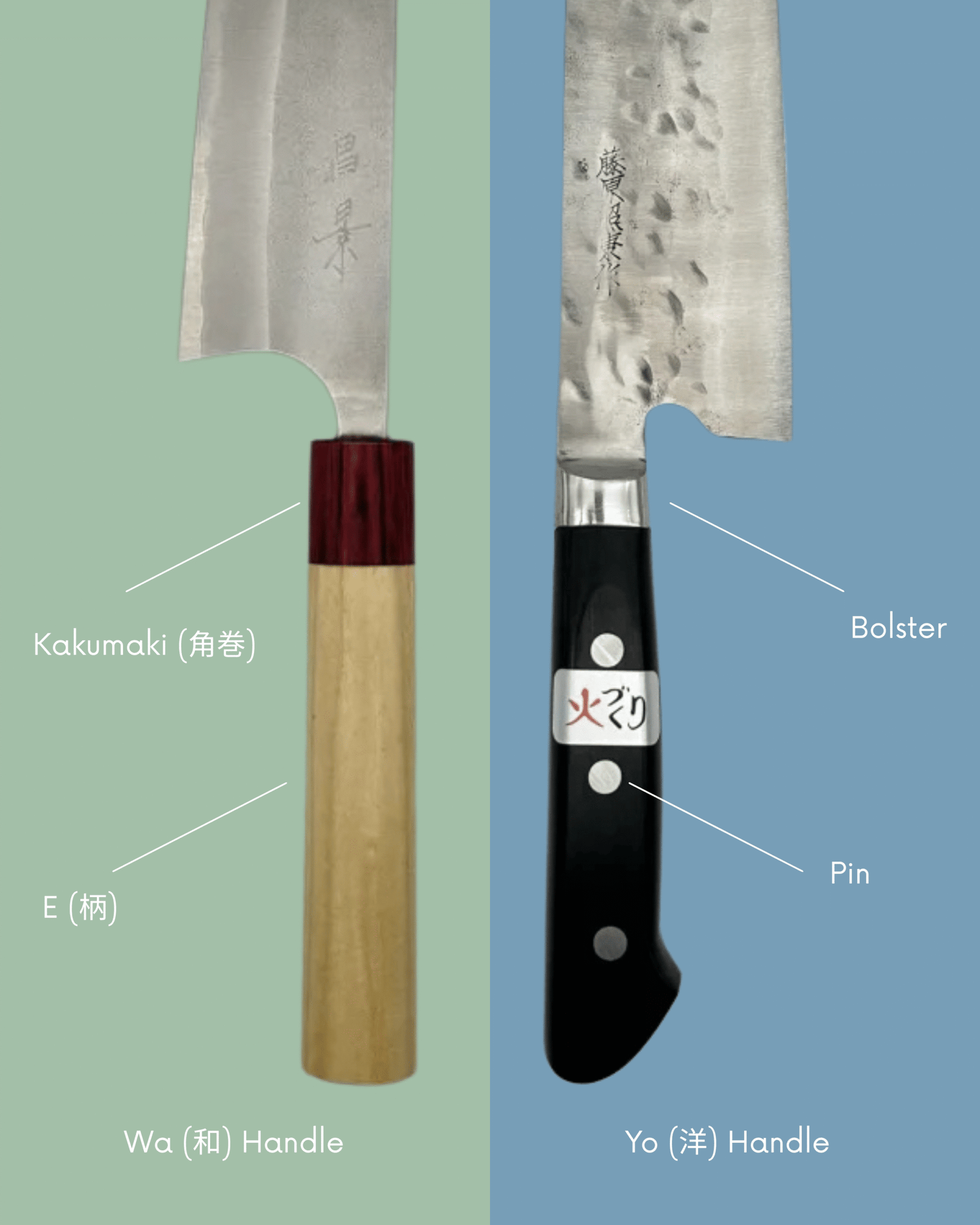 The handle determines how the knife feels in hand and where its balance lies.
Wa (和)
A traditional Japanese lightweight wooden handle that shifts the center of gravity toward the blade, allowing the knife to “cut by itself.”
Tsuka (柄) — Handle Body
Traditionally made from magnolia (Ho-no-ki), which is naturally slip-resistant.
Kakumaki (角巻) — Ferrule
The reinforcement ring at the top of the handle (often made from buffalo horn) that prevents the wood from splitting.
Yo (洋)
A Western-style, heavier handle with a full tang.
Bolster — the metal section between blade and handle that strengthens the structure, improves balance, and protects fingers from slipping.
Rivets — metal fasteners securing the handle scales to the tang, ensuring strength, durability, and stability.
Other Important Details
Kanji (漢字) — The Maker’s Signature
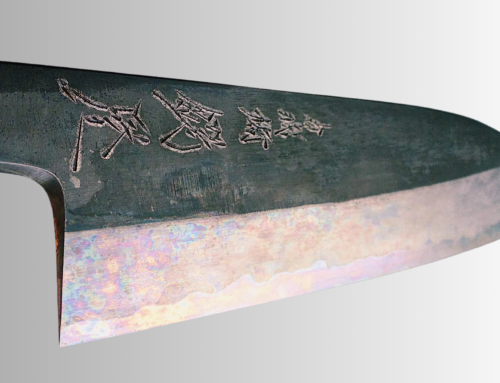
Japanese characters engraved on the blade indicating the blacksmith, workshop, or steel type. Kanji serve as the knife’s “passport” and authenticity mark — often becoming a true work of art.
Mune (棟) — Spine
The upper, unsharpened part of the blade. On a quality knife, the spine is rounded and polished to prevent discomfort when applying finger pressure.
Hira (平) — Blade Face
The area above the Shinogi line. This surface often features a Tsuchime (hammered) texture.
Nakago (中子) — Tang
The portion of metal hidden inside the handle. In Japanese knives, it is often narrower to maintain lightness and balance.
Conclusion
A Japanese kitchen knife is not just a sharp piece of metal. It is the result of centuries of evolution. From the Kanji inscriptions telling the maker’s story to the Ago and Hamoto zones enabling surgical precision — every detail serves a clear purpose.
When choosing your next tool, don’t just cut with a knife — command history.