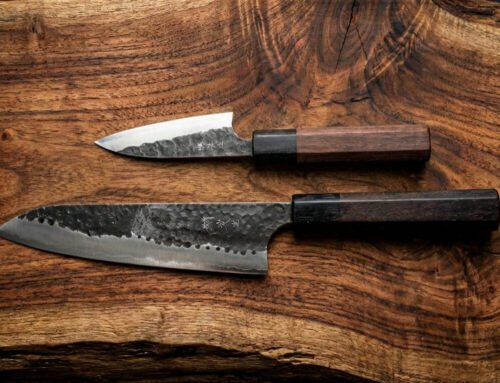
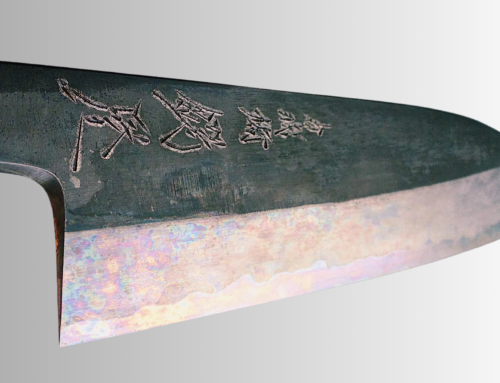
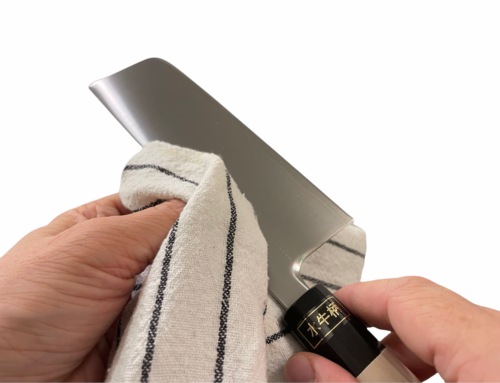
Why do some knives resemble heavy tanks, while others feel like precision scalpels? The answer lies not only in steel, but in centuries of cultivated culture. Although both tools are designed for cutting, their philosophy, construction, and “behavior” in the kitchen differ fundamentally.
 From Katanas to the Kitchen
The quality of Japanese knives is no coincidence — it is a necessity born from political change. In 1876, during the Meiji period, the Japanese government issued the Haitōrei (廃刀令) edict, which prohibited the public carrying of weapons. This decision dealt a devastating blow to the samurai class and traditional swordsmiths.
After centuries of perfecting deadly weapons, the country’s finest craftsmen suddenly found themselves without work. To survive, they applied their extraordinary skills to kitchen tools. Thus, the secrets and spirit of katana forging moved into the culinary world, transforming food preparation into a form of art.
Philosophical Approach: Precision vs. Force
 Japan: Respect for the Ingredient
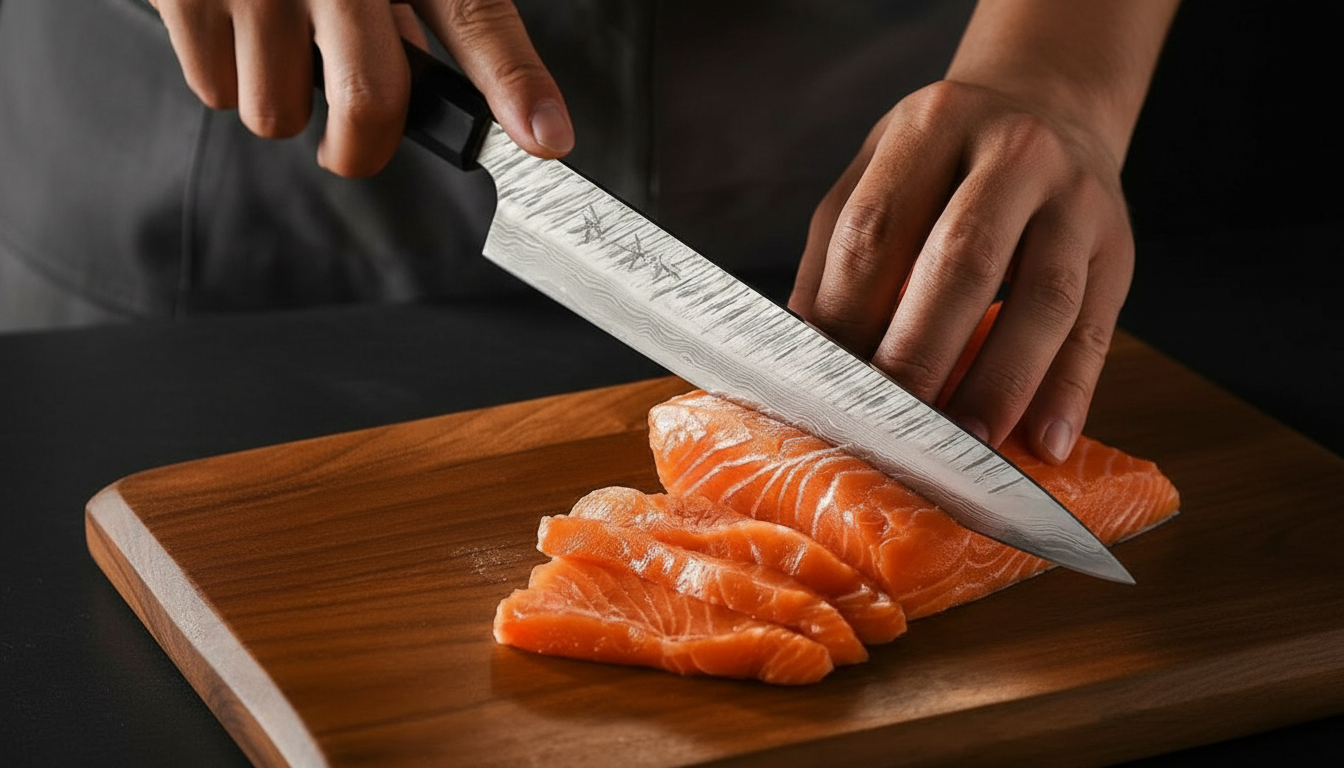
In Japanese cuisine, there is a concept called shun (旬) — respect for seasonal freshness and the rhythm of nature. Japanese cooking often prioritizes raw or minimally processed food, which makes the knife an especially important tool. It is judged by how little it damages the cells of the ingredient and how precisely it reveals the natural structure, color, and texture.
Why does this matter? Intact cells mean natural juices remain inside, preserving the true, unaltered flavor and texture of the food. This idea is best illustrated by the Japanese term for sharpness — “Kireaji” (切れ味), which translates directly as “the taste of the cut” or “the feeling of the cut.” It reflects the belief that sharpness is not merely a technical characteristic, but an essential element in experiencing and revealing the true quality of an ingredient.
The West: Practicality and Endurance
Western cuisine historically relied on long cooking, roasting, and blending of flavors, so cell integrity was not a priority. The main focus was efficiency with minimal effort. German or French knives are heavy because their mass and gravity do much of the work for you, and their versatile blade does not shy away from tougher tasks.
Specialization: A Knife for Every Task
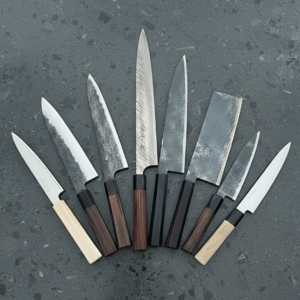
In Japan, it is believed that every ingredient deserves its own dedicated tool. Instead of relying on one universal chef’s knife, the Japanese developed dozens of specialized blade shapes:
-
Deba (出刃) – a heavy, thick knife used for breaking down large fish without damaging the flesh.
-
Nakiri (菜切り) – a flat-bladed knife designed for fast and precise vegetable chopping.
-
Sujihiki (筋引) – a long, narrow knife used for slicing boneless meat.
-
Unagisaki (鰻割き) – a highly specialized tool for precisely filleting eel.
-
Fuguhiki (河豚引) – paper-thin blade designed for slicing poisonous fugu (pufferfish) into translucent pieces.
-
Sobakiri (蕎麦切り) – a cleaver-like knife used for cutting handmade soba noodles.
Key Characteristics: What to Know Before You Buy
Verdict
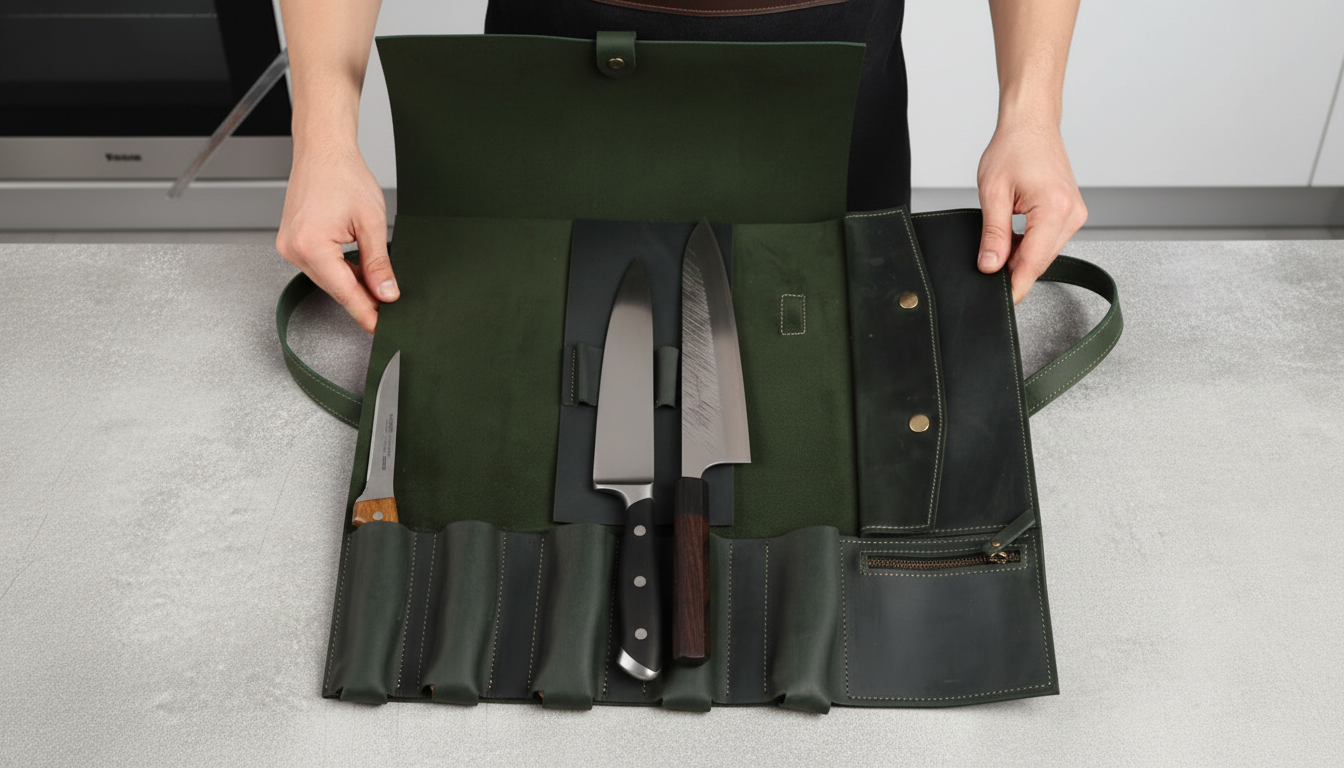
There is no single “best” knife — everything depends on your needs. The most practical solution? Have both types in your kitchen. A reliable Western “workhorse” that confidently handles daily challenges — from cutting tougher ingredients to chopping. And alongside it, a few specialized Japanese knives for perfect, clean cuts and to experience true “Kireaji” — that special moment when the blade glides through an ingredient as if it barely touches it.